

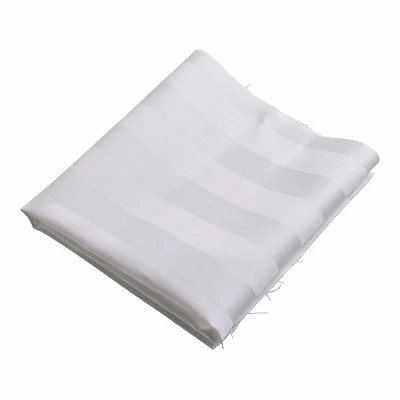

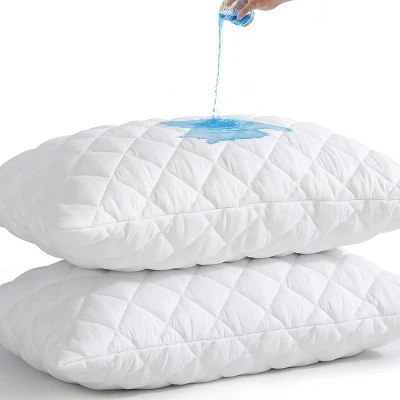
The production of hotel bedding fabrics typically involves several stages: raw material selection, spinning, weaving, dyeing and finishing, and final inspection. First, suitable fiber raw materials-such as cotton, polyester, or cotton-polyester blends-are selected based on the bedding's intended use. Cotton fibers undergo processes including opening, carding, drawing, roving, and spinning to become yarn; yarn count and warp/weft density are then determined according to product specifications. Hotel sheets, duvet covers, and pillowcases generally utilize plain, twill, or satin weaves, formed by the interlacing of warp and weft yarns into a complete greige fabric. Variations in raw material ratios, yarn thickness, and weaving density directly influence the fabric's softness, breathability, abrasion resistance, and overall hand-feel.
Once woven, the greige fabric undergoes a series of finishing processes to meet the practical requirements of hotel use. Common steps include desizing, scouring, bleaching, dyeing, mercerizing, softening, and pre-shrinking. White hotel bedding usually requires bleaching to ensure a clean, uniform appearance; some high-quality pure cotton fabrics undergo mercerization to enhance smoothness, luster, and hand-feel. Pre-shrinking is primarily used to minimize shrinkage after washing, ensuring that sheets and duvet covers maintain relatively stable dimensions even after repeated laundering. For products requiring special properties, additional functional finishes-such as waterproofing, stain resistance, or antimicrobial treatments-can be applied based on specific needs.
Following dyeing and finishing, the fabric undergoes inspection and cutting to verify that color, width, weight, dimensional stability, and surface quality meet standards before being processed into final products like sheets, duvet covers, and pillowcases. As hotel bedding is subject to frequent use, production must consider not only initial softness but also performance after repeated washing. Manufacturers typically conduct tests on finished products-evaluating shrinkage, color fastness, breaking strength, and abrasion resistance-to ensure the bedding can withstand the rigors of long-term hotel use and industrial-scale laundering. The entire production process can be summarized as "raw material selection-spinning-weaving-dyeing and finishing-functional treatment-finished product inspection-cutting and sewing," with each stage influencing the quality and durability of the final bedding products.